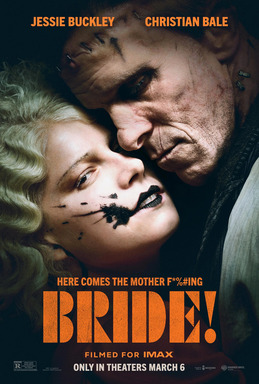
Maggie Gyllenhaal's The Bride: Reimagining a Classic Horror Icon
Maggie Gyllenhaal's foray into the director's chair with "The Bride" was met with a potent mix of anticipation and intrigue. Following her critically acclaimed directorial debut, "The Lost Daughter," Gyllenhaal embarked on an ambitious journey: to reimagine one of horror's most enduring and enigmatic figures – the Bride of Frankenstein. Her vision promised not just a modern retelling but a profound reinterpretation, aiming to give voice and agency to a character famously denied both in her original incarnation. However, despite a compelling premise and Gyllenhaal's undeniable artistic talent, the film's journey has been marked by a challenging box office performance, raising questions about the appetite for such bold genre experiments and the future of creative filmmaking within established franchises.
A Bold Reinterpretation of a Timeless Myth
Gyllenhaal's "The Bride" takes its foundational inspiration from James Whale's iconic 1935 film, "The Bride of Frankenstein," a cornerstone of Universal's classic monster universe. Yet, Gyllenhaal's interest lay not just in homage but in examination – specifically, what the original narrative *excluded*. As she herself observed, the titular Bride in the classic film is largely silent, a creation whose purpose is defined by her male counterpart, the Monster. This revelation sparked a crucial question for Gyllenhaal: what if "The Bride" could speak? What if she had desires, thoughts, and a journey of self-discovery independent of her creator or intended mate?
This philosophical starting point set the stage for a potentially revolutionary horror film. Gyllenhaal, having earned significant praise for her nuanced character studies in "The Lost Daughter" (an Elena Ferrante adaptation that co-starred Jessie Buckley), was uniquely positioned to explore the inner life of a character traditionally seen as an object. Her approach signals a move towards a more introspective, character-driven horror, where the terror might stem less from jump scares and more from the existential dread of creation, identity, and the struggle for autonomy. This reimagining speaks directly to contemporary discussions about female agency, bodily autonomy, and the power of narrative perspective, positioning "The Bride" as more than just a monster movie but a resonant cultural commentary.
Crafting a New Narrative for *The Bride*
In stepping behind the camera for her second feature, Maggie Gyllenhaal had the opportunity to imbue "The Bride" with a distinct directorial vision. Her approach, likely steeped in the kind of psychological depth seen in "The Lost Daughter," suggests a focus on the emotional and intellectual awakening of the creature. Rather than merely being a monstrous counterpart to Frankenstein's creation, this new Bride would arguably grapple with the very essence of her existence.
Consider the narrative possibilities:
- The Birth of Consciousness: How does a being, brought to life through scientific hubris, come to understand itself and the world around it? Gyllenhaal could explore the profound disorientation and awe that accompanies such an experience.
- Breaking the Mold: The original Bride was created *for* the Monster. Gyllenhaal's film likely explores her rejection of this pre-ordained destiny, her struggle to define her own purpose and desires outside the patriarchal confines of her creation. This could involve exploring themes of freedom, self-ownership, and the right to choose one's own path.
- The Search for Identity: Without a past, memories, or a given name, how does *The Bride* forge an identity? This journey could involve encounters with society, the natural world, and other individuals, revealing the complexities of human connection and alienation.
- Visual Storytelling: Given Gyllenhaal's artistic sensibilities, the film's aesthetics likely play a crucial role. One can imagine a rich, atmospheric visual style that enhances the emotional landscape of "The Bride," perhaps blending classic gothic horror elements with a modern, psychological realism.
This kind of narrative depth offers audiences a chance to connect with a horror icon on a much more profound level, transforming her from a screaming, reactive figure into a protagonist with a compelling internal world. It’s an ambitious undertaking, aiming to peel back layers of expectation and give a classic character a contemporary, resonant voice.
The Box Office Reality: A Tale of Mixed Signals
Despite the exciting artistic premise, "The Bride" faced significant challenges upon its release, particularly regarding its commercial performance. The numbers paint a picture of a film struggling to find its footing in a competitive market. Its opening weekend grossed approximately $9 million, with about $2.8 million on its first Friday. However, the subsequent projections were stark: a potential 70% drop in its second weekend, signaling a rapid decline in audience attendance. With a reported budget of around $80 million, this performance puts the film on a difficult path towards profitability.
The critical reception for "The Bride" was mixed, garnering a 62% score on Rotten Tomatoes. While not universally panned, this "mixed" rating often struggles to galvanize widespread public interest, especially for an original concept or a deep reimagining of a classic. However, in an interesting contrast, audience scores told a different story. The film achieved a "B+" Cinemascore, indicating a generally positive reception from those who actually saw it. This disparity between critical consensus and audience satisfaction is a recurring theme in modern cinema, often leaving studios and filmmakers grappling with differing interpretations of success.
For a deeper dive into these commercial complexities, you might be interested in exploring
The Bride's Box Office Flop: What It Means for Maggie Gyllenhaal and
The Bride: Why Good Audience Scores Couldn't Save Its Box Office. The implications for Maggie Gyllenhaal's budding directorial career are also a key point of discussion. While one box office performance doesn't define a career, a significant financial shortfall can certainly impact future opportunities and the willingness of studios to back similarly ambitious, high-budget projects. It underscores the constant tension between artistic vision and commercial viability in Hollywood.
The Enduring Legacy of *The Bride*
Despite its challenging box office journey, "The Bride" stands as an important entry in the ongoing evolution of the horror genre and the reimagining of classic figures. Maggie Gyllenhaal's film contributes to a growing trend of genre films that prioritize thematic depth, psychological exploration, and diverse perspectives. It reinforces the idea that horror is not merely about scares but can be a powerful vehicle for social commentary and character study.
The film's reception, particularly the discrepancy between critics and audiences, offers valuable insights:
- The Power of the Audience Score: A good Cinemascore suggests that those who *chose* to see "The Bride" generally enjoyed it, indicating that the film likely resonated with its target demographic, even if that demographic wasn't large enough to drive massive box office returns. This internal validation can be crucial for a film's long-term legacy.
- Cult Potential: Many films that struggle commercially upon release eventually find their audience and achieve cult status. "The Bride," with its unique premise and Gyllenhaal's distinct artistic voice, could very well become a beloved film among horror aficionados and those appreciative of bold cinematic risks.
- Lessons for Filmmakers: Gyllenhaal's project highlights the courage required to take on beloved classics and infuse them with new meaning. While commercial success remains a goal, the artistic integrity and the conversation generated by such reinterpretations often have a longer-lasting impact on cinema.
Ultimately, "The Bride" prompts us to consider the value of artistic ambition even when the financial returns are not immediate. It challenges viewers to rethink what a monster can be and what stories a "classic horror icon" can tell in the 21st century.
Conclusion
Maggie Gyllenhaal's "The Bride" is a testament to the enduring power of classic horror narratives and the courage of filmmakers to reinterpret them for contemporary audiences. Her vision to give a voice to a character historically silenced is a significant artistic endeavor, pushing the boundaries of what a "monster movie" can explore. While the film's box office performance presents a complex narrative of its own, the positive audience reception and the ambitious nature of the project ensure its place in discussions about modern horror, female-led storytelling, and the delicate balance between artistic integrity and commercial viability. Regardless of its financial journey, "The Bride" remains a thought-provoking reimagining, inviting us to look deeper into the shadows of our cinematic past and discover new stories waiting to be told.