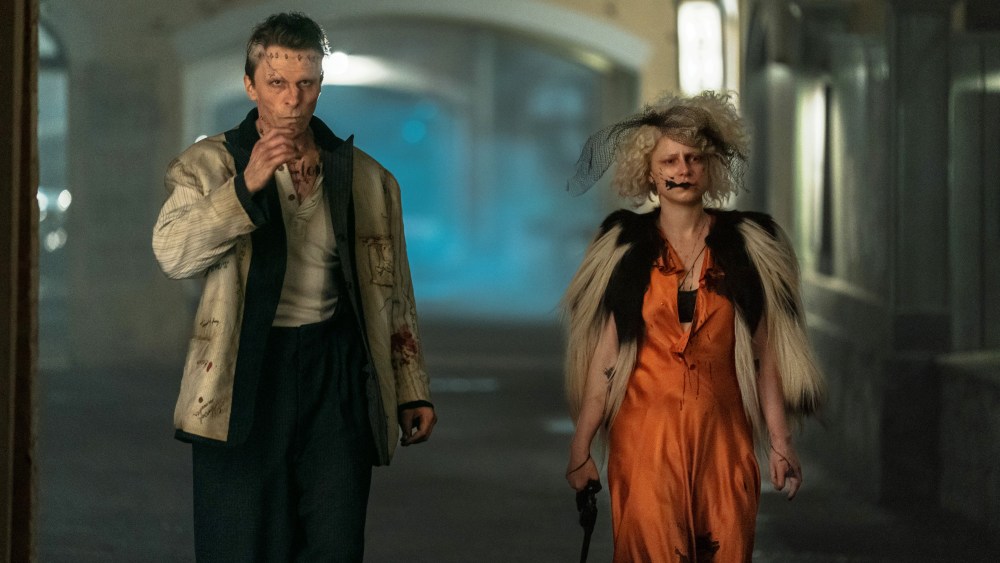
The glitz and glamour of Hollywood often obscure the harsh realities of the box office, where artistic vision clashes with commercial viability. For acclaimed actor-turned-director Maggie Gyllenhaal, her ambitious sophomore feature, The Bride!, appears to be learning this lesson the hard way. Following a successful directorial debut, Gyllenhaal’s reimagining of a classic horror icon is facing a challenging reception, raising questions not only about the film’s performance but also the trajectory of her burgeoning career behind the camera.
A Troubling Second Act for The Bride!
From the outset, Maggie Gyllenhaal’s The Bride! was an intriguing proposition. A modern take on the iconic 1935 horror classic, The Bride of Frankenstein, promised a fresh perspective, especially given Gyllenhaal’s stated interest in exploring the silent, unvoiced aspects of the original character. However, ambition alone doesn't guarantee box office success. The film's early financial returns paint a concerning picture.
After an opening weekend that saw The Bride! pull in a modest $9 million, including $2.8 million on its first Friday, projections for its second weekend indicate a precipitous decline. Analysts are forecasting a drop of around 70%, a significant tumble that suggests a lack of staying power and audience retention. For a film reportedly carrying an $80 million budget, these numbers are undoubtedly a cause for concern for the studio and Gyllenhaal alike.
What makes this situation particularly perplexing is the dichotomy between critical and audience reception. On Rotten Tomatoes, the film garnered mixed reviews, settling at a 62% approval rating. While not a ringing endorsement, it's certainly not a critical disaster either. More notably, audiences, typically the ultimate arbiters of a film's longevity, rated The Bride! with a solid B+ Cinemascore. This suggests that those who did see the film generally enjoyed it, which makes its commercial struggles all the more puzzling. This disconnect between positive audience feedback and poor box office performance is a phenomenon worth exploring, and we delve deeper into it in our related article: The Bride: Why Good Audience Scores Couldn't Save Its Box Office.
Maggie Gyllenhaal's Journey from Acclaimed Actor to Director
Maggie Gyllenhaal's transition from an acclaimed, Oscar-nominated actor to a director was met with considerable anticipation. Her acting career boasts an impressive filmography, demonstrating a keen eye for compelling narratives and complex characters. Projects like Donnie Darko, Secretary, and The Dark Knight cemented her reputation as a versatile and thoughtful performer.
Her directorial debut, The Lost Daughter (2021), was a critical triumph. Adapted from an Elena Ferrante novel and starring Olivia Colman and Jessie Buckley, the film received widespread praise for its nuanced exploration of motherhood, desire, and identity. It earned Gyllenhaal an Oscar nomination for Best Adapted Screenplay, a clear signal that her talents extended beyond performing in front of the camera. This success undoubtedly paved the way for a more ambitious project like The Bride!.
For her second feature, Gyllenhaal turned to a legendary horror figure. She articulated a vision for The Bride! that moved beyond a mere remake, focusing instead on the subtext and unexplored potential of the original character. "I watched the movie, and I realised [the Bride] doesn't speak," she noted, highlighting her intent to give voice and agency to a character historically defined by her creation and reaction. This artistic curiosity and desire to reimagine a classic icon formed the core of her new vision, as discussed further in Maggie Gyllenhaal's The Bride: Reimagining a Classic Horror Icon. Taking on such a beloved, deeply embedded piece of pop culture history is a bold move, carrying with it both immense opportunity and significant risk.
The Challenges of Reimagining a Classic Horror Icon
Reinventing a character as iconic as the Bride of Frankenstein is a tightrope walk. Audiences have strong attachments to the original, yet a straightforward remake often fails to resonate with contemporary tastes. Gyllenhaal’s approach was commendable in its ambition – seeking to fill in the narrative gaps and empower the character. However, translating a unique artistic vision into a commercially successful horror film with an $80 million budget is a monumental task.
- Balancing Homage and Innovation: How much should a modern film rely on the legacy of its source material versus forging its own path? Striking this balance is crucial.
- Genre Expectations: The horror genre itself is diverse, but audiences often come with specific expectations for scares, tension, and narrative pacing. Deviating too far can alienate a core demographic.
- Marketing Strategy: How does a studio market a film that is both a horror film and a character study? The messaging needs to be clear and compelling to attract the right audience.
The lukewarm critical reception, despite positive audience scores, suggests a potential mismatch between the film's artistic intent and what a broad commercial audience expected or understood. While the B+ Cinemascore indicates satisfaction among those who saw it, the low turnout points to a failure in attracting a wider viewership, perhaps due to confusing marketing or strong competition in the marketplace.
What This Means for Maggie Gyllenhaal's Directorial Future
A significant box office underperformance, particularly for a film with an $80 million budget, can have considerable implications for a director's career. While Maggie Gyllenhaal's reputation as an actor and her success with The Lost Daughter provide a strong foundation, the commercial failure of The Bride! could mean a temporary pause or a re-evaluation of her directorial path.
Potential Scenarios for Gyllenhaal:
- Return to Indie Projects: After a big-budget flop, directors often pivot back to smaller, independent films where artistic control is higher and financial stakes are lower. This allows for experimentation and rebuilding a track record without immense pressure.
- Acting Roles: Gyllenhaal is a highly respected actor, and a return to more acting roles could provide a stable platform while she considers her next directorial move. This isn't a setback but a strategic shift.
- Studio Hesitation: While her debut was critically acclaimed, studios are inherently risk-averse, especially with large budgets. Securing funding for another big-budget project might prove more challenging in the immediate future.
- Learning and Adapting: Every film, successful or not, offers lessons. Gyllenhaal is known for her intelligence and thoughtfulness, and she will undoubtedly learn from this experience, perhaps refining her approach to balancing commercial appeal with her artistic vision.
For aspiring directors, Gyllenhaal's experience with The Bride! serves as a valuable case study. It underscores the immense pressure of working with large budgets and the difficulty of satisfying both critical and commercial expectations, especially when reimagining beloved intellectual property. It highlights that even immense talent and a clear artistic vision don't always guarantee box office success. The industry is fickle, and recovery often involves strategic project selection, financial pragmatism, and a keen understanding of the market. Perseverance and adaptability are key attributes for long-term success in the director's chair.
The box office performance of Maggie Gyllenhaal's The Bride! presents a complex narrative. While critical reviews were mixed and audience reception relatively positive, the film's financial trajectory is undeniably concerning, especially given its significant budget. For Gyllenhaal, a director who showed immense promise with her debut, this setback will undoubtedly prompt a period of reflection. However, the depth of her talent, both as an actor and a storyteller, suggests that this is far from the end of her directorial journey. The path to establishing a sustained career behind the camera is often fraught with challenges, and how Gyllenhaal navigates this period will be a testament to her resilience and artistic resolve.